
2020 Year-In-Review
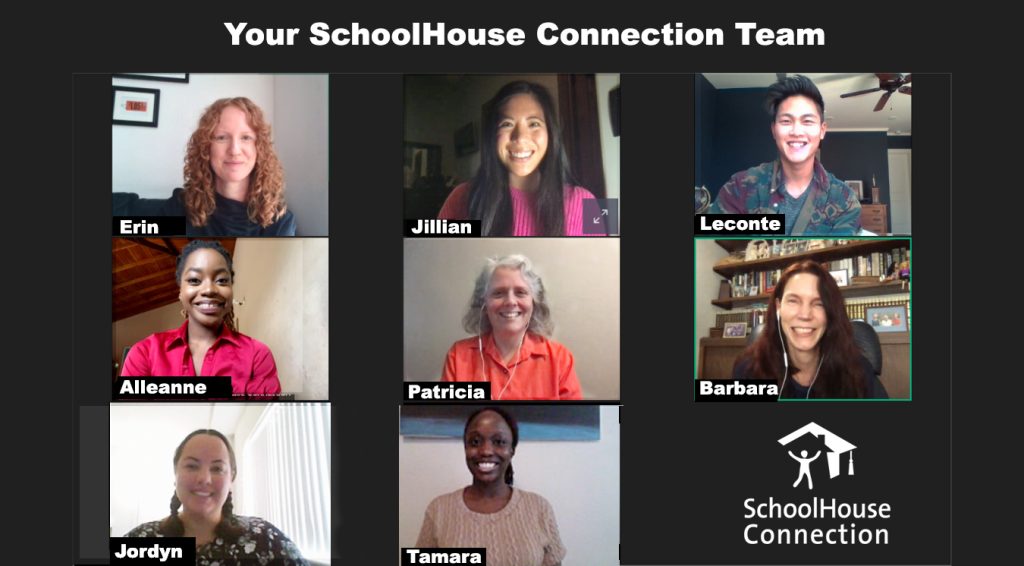
As 2020 comes to a close, we pause, and take a breath.
We recognize that the year’s traumas – COVID-19, the economic crisis, systemic racism, and the deep political divisions that tear at the fabric of our nation – are ongoing, and won’t end with the calendar year. But we also believe it is important to take strength and build resolve from what we have been able to accomplish, collectively, in this most difficult of years.
In this spirit, we offer our annual Year in Review/Accomplishments. We hope you’ll be reminded of what can be done – together – even in the face of overwhelming challenges; discover useful resources you may have missed; and find hope in our common cause of overcoming homelessness through education.
With gratitude to our funders, our SHC family, and you: your support means the world to us, and we thank you for your partnership. Together with you, we will continue to support children, youth, and families through this crisis and work to break generational cycles of homelessness through the power of education.
Sincerely,
Your SchoolHouse Connection Team

Responding to Covid-19
When early childhood programs and schools across the country shut their doors and turned to remote learning in March 2020, children and youth experiencing homelessness were left without the most stable and secure place in their lives: school.
Less than a week after the national emergency was declared, SchoolHouse Connection brought hundreds of educators together virtually to learn, share, and discover solutions to the unprecedented challenges of helping children and youth who were both homeless and school-less. Since then, we’ve convened thousands of educators, service providers, and advocates in 12 virtual trainings to learn practical strategies and find strength in the community.
You told us the kinds of tools you needed – checklists, guides, PSAs, infographics – and we created them.
You asked us questions based on the real-life situations you faced, and we answered them, compiling our responses in a living public archive so that others could learn.
You let us know about the policy barriers that prevented you from identifying and assisting children, and we advocated for real resources and solutions.
In sum, we put our advocacy principles into practice, even bringing the voices of youth and parents experiencing homelessness before lawmakers to hear directly about the impact of the pandemic and homelessness on their education and their lives.
In this darkest chapter, we brought the light of our passion, our knowledge, and our amazing national network to the aid of some of our nation’s most vulnerable children, youth and families, helping them survive and thrive.

Fighting Racism
We reeled at the horrific murders of George Floyd, Breonna Taylor, Ahmaud Arbery, and countless others who lost their lives as a result of systemic racism. These events prompted a reckoning that our mission of overcoming homelessness through education means fighting racism. Systemic racism is a driver of homelessness, as demonstrated by racial disparities in the likelihood of families and youth becoming homeless, in the prolonged harmful consequences of homelessness, and in barriers to accessing education and services.
But we know it takes much more than a statement to create real change. Authentic transformation must be personal, and at all levels of our organization, to be sustained and effective. Internally, we are undertaking a racial justice assessment and year-long training, inclusive of board and staff. Externally, we initiated conversations with local and state McKinney-Vento practitioners of color, and young people of color, about how the McKinney-Vento Act can be implemented as a racial equity tool. We look forward to sharing the lessons and learnings, as well as new resources and tools, in 2021.
Read SHC Statement2020’s Top Policy Advocacy Accomplishments
Federal Advocacy
In 2020, SHC continued to be a strong voice for effective and responsive federal advocacy.
1. At a time of hyper-partisanship and deep divide, we advanced a Congressional policy agenda with bipartisan support, including:
- Celebrating the culmination of a decade of consistent, bipartisan advocacy to help youth experiencing homelessness and from foster care access financial aid with the passage of nearly all of the financial aid provisions from Higher Education Access and Student for Homeless and Foster Youth Act (“HEASHFY”) in the final omnibus spending package. Our young leaders have spoken to Congress and federal agency officials repeatedly over the years about the hardships they have faced simply trying to get the financial aid to which they are entitled – and which they need to build a strong future, free of homelessness. These enacted amendments will remove many barriers to financial aid, and help young people achieve their dreams. We look forward to working hard to ensure that the amendments are implemented robustly in the months and years ahead.

“I’ve participated in hundreds and, perhaps, thousands of hearings during my lifetime. I’ve never been as impacted by any of them that I’ve ever been in before, to this extent. It just occurred to me that each one of these young women are absolute heroes. Real troopers. Who, in spite of odds, have demonstrated real essence of personhood, and are people to be admired, respected, and assisted in any way that we possibly can. I mean, you renewed within me a desire as well as an effort to try and convince all of my colleagues, and all of those who are decision makers, anywhere around the country, to do more to find additional money, additional resources… [to] create additional ways and approaches.”
- Leading advocacy on four bipartisan bills and federal funding for the Education for Homeless Children and Youth program. SHC’s advocacy is informed by local realities and the direct experiences of youth, families, and the educators and providers who serve them. With their guidance, we pushed for real solutions that address well-documented barriers to education, early care, housing, and homelessness assistance, including four bipartisan bills: the Emergency Family Stabilization Act (H.R. 7950/S. 3923); the Higher Education Access and Success Act for Homeless and Foster Youth Act (S.789/H.R.1724); the Homeless Children and Youth Act (H.R. 2001); and the Housing for Homeless Students Act (S. 767/H.R. 4865). We also lead advocacy on federal funding for the Education for Homeless Children and Youth program, which resulted in a 5% increase in FY2021 funding.
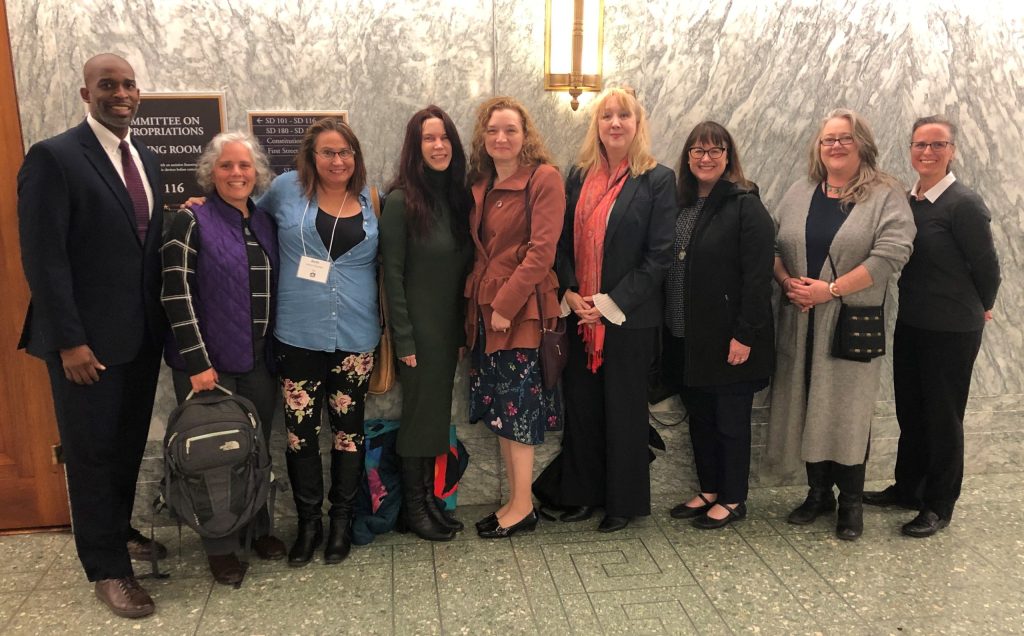
- Hosting four bipartisan virtual Congressional briefings. Together with our partners, we hosted four virtual Congressional briefs on the impact of the coronavirus pandemic, featuring the real experts: youth experiencing homelessness; parents experiencing homelessness; service providers; and school district homeless education liaisons. By creating a platform for the voices of those most impacted by the crisis to be heard by policymakers, we helped to convey the urgent realities and the urgent need for action.
2. We continued to expand our federal administrative advocacy, including providing comments on the revised strategic federal plan to end and prevent homelessness; proposing state applications for federal child care funds; and proposing a vaccine allocation framework for COVID-19.
3. Within days of the 2020 election, we crafted and released our priorities for the incoming Biden-Harris Administration, including specific actions for the first 100 days and beyond. We also added our voices to those of leading education and civil rights organizations, helping to ensure that homelessness is part of the broader education advocacy effort. We look forward to working with the transition team and federal leaders as our nation turns to the daunting tasks of responding, recovering, and rebuilding from the pandemic, with equity at the center of all efforts.
State Policy
State policy change is an increasingly important strategy to address youth and family homelessness. SchoolHouse Connection’s state policy program supports state-based teams in achieving lasting, state-level policy changes to improve the lives and futures of young people experiencing homelessness.
1. Celebrated the passage of several bills
Together with our state and local partners, we celebrated the passage of several bills before the COVID-19 pandemic closed many state legislatures, including:
- Bills allowing unaccompanied homeless minors to receive shelter and supportive services on their own in Maryland.
- A bill extending Medicaid to youth experiencing homelessness up to age 21 in Missouri.
- Our California youth scholars were proud to testify in support of the successful enactment of AB 2416, which will help students experiencing homelessness maintain their financial aid.
2. Increased our focus on the implementation of state policies
We increased our focus on the implementation of state policies, to make sure the policies we help pass actually make a difference for children and youth, by:
- Convening over 100 public school districts and charter schools in Colusa, Contra Costa, San Diego counties in California, to help them develop action plans to improve identification, attendance, and high school graduation for students experiencing homelessness, in line with AB 1806.
- Partnering with the Nevada Partnership for Homeless Youth, Nevada Office of Vital Records, and Nevada DMV to deliver a statewide webinar and create user-friendly guides to help youth access their birth certificate, ID and driver’s license at no cost and without a parent, implementing our AB 363.
- Gathering over 100 higher education professionals, school districts, and advocates at a statewide conference in Tennessee, co-hosted with the University of Memphis, Middle Tennessee State University, and Pellissippi State Community College, where we shared best practices and built community awareness to implement our HB 1000, supporting college students experiencing homelessness.
- Collaborating with the Nevada Department of Education on guidance, a webinar, and a practical how-to document to award partial credits to students experiencing homelessness, implementing our SB 147.
3. Laid the groundwork for 2021
We laid the groundwork for expanding state policy advocacy and implementation work in 2021 by:
- Building coalitions, conducting state policy needs assessments, and drafting bill language in 13 states where we will work with our partners on state policy advocacy and implementation in 2021.
- Extending our state policy work in early childhood by partnering with Baker McKenzie and United Airlines to publish a state-by-state summary of state provisions to help children experiencing homelessness access child care and preschool.
- Continuing our work with the National Conference of State Legislatures, including co-presenting with NCSL staff and the Assistant Secretary of Housing and Urban Development on the national webinar “COVID-19: Housing and Homelessness.”
2020’s Top Practice Accomplishments, Birth Through Postsecondary
Educational equity for children and youth experiencing homelessness must be grounded in practice — in the day-to-day work of educators and providers who strive to create access and sustained support. In 2020, we provided intensive practical assistance from birth through postsecondary education, including:
1. Launching a 15-state community of practice as part of the Education Leads Home (ELH) campaign. SHC is a core partner in Education Leads Home, a multi-year, national campaign launched in 2018 to improve educational and life outcomes for students experiencing homelessness. In 2020, with our support, 15 state leadership teams are implementing activities across early childhood, K12, and postsecondary that will result in measurable progress toward ELH goals. Over the course of a year, state teams are making progress on practical needs to increase enrollment in high-quality early childhood programs, increase high school graduation rates, and increase postsecondary persistence and attainment. For example, our partner in Washington state, Building Changes, is developing outreach materials to immigrant and refugee communities so they are aware of their child’s educational rights under McKinney-Vento; North Dakota is establishing a university pilot for identification of students experiencing homelessness on college campuses; and Hawaii is disseminating an early childhood needs assessment, including raising awareness among state legislators.
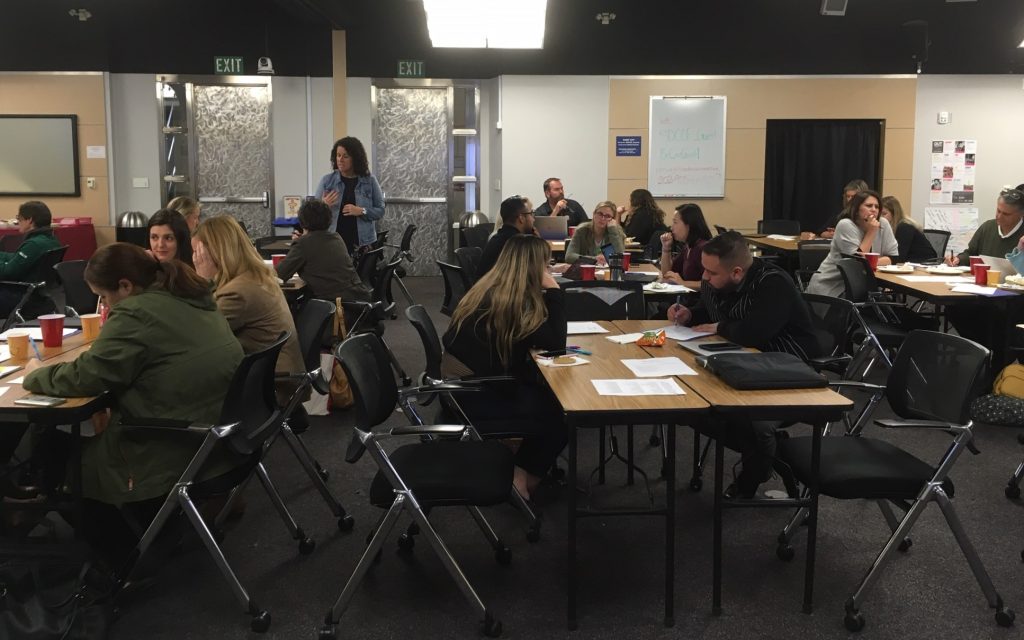
2. Helping hundreds of charter schools create action plans to increase the identification and success of students experiencing homelessness. Federal data show that over 60,000 children and youth experiencing homelessness, particularly students of color, attend charter schools. Understanding their needs is a vital part of addressing the growing child and youth homelessness crisis. Through in-person and virtual convenings in Los Angeles and San Diego CA, San Antonio TX, and Washington DC, and national webinars and publications through our collaboration with NAPCS, we helped charter schools understand their legal duties to students experiencing homelessness and best practices to implement them. We also learned from charter schools through a nationwide outreach, site visit, and interview process that culminated in our publication, “Charter Schools and Students Experiencing Homelessness.”
Charter School Convening in Texas in February 2020.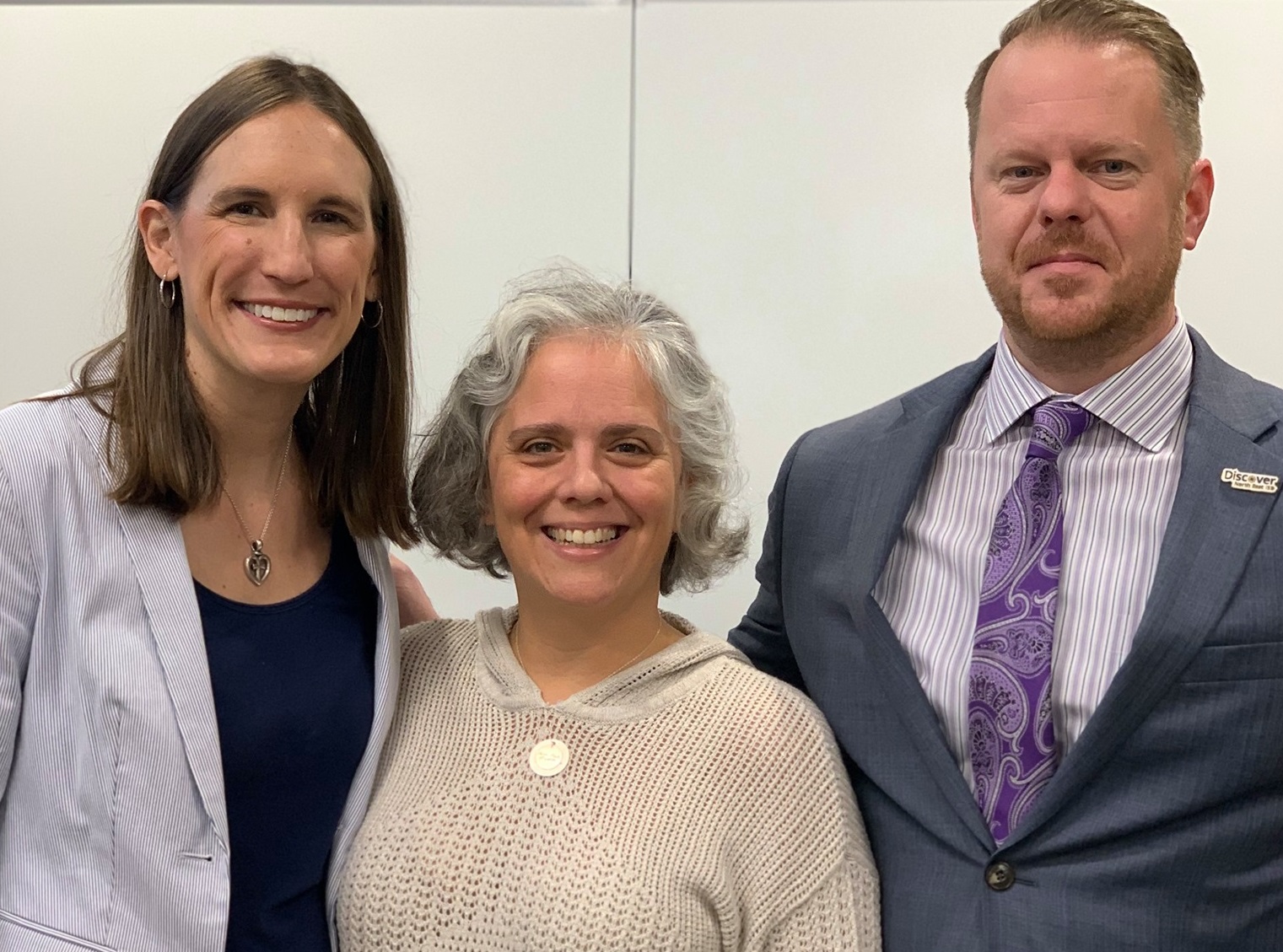
Charter School Convening in Washington, D.C. in February 2020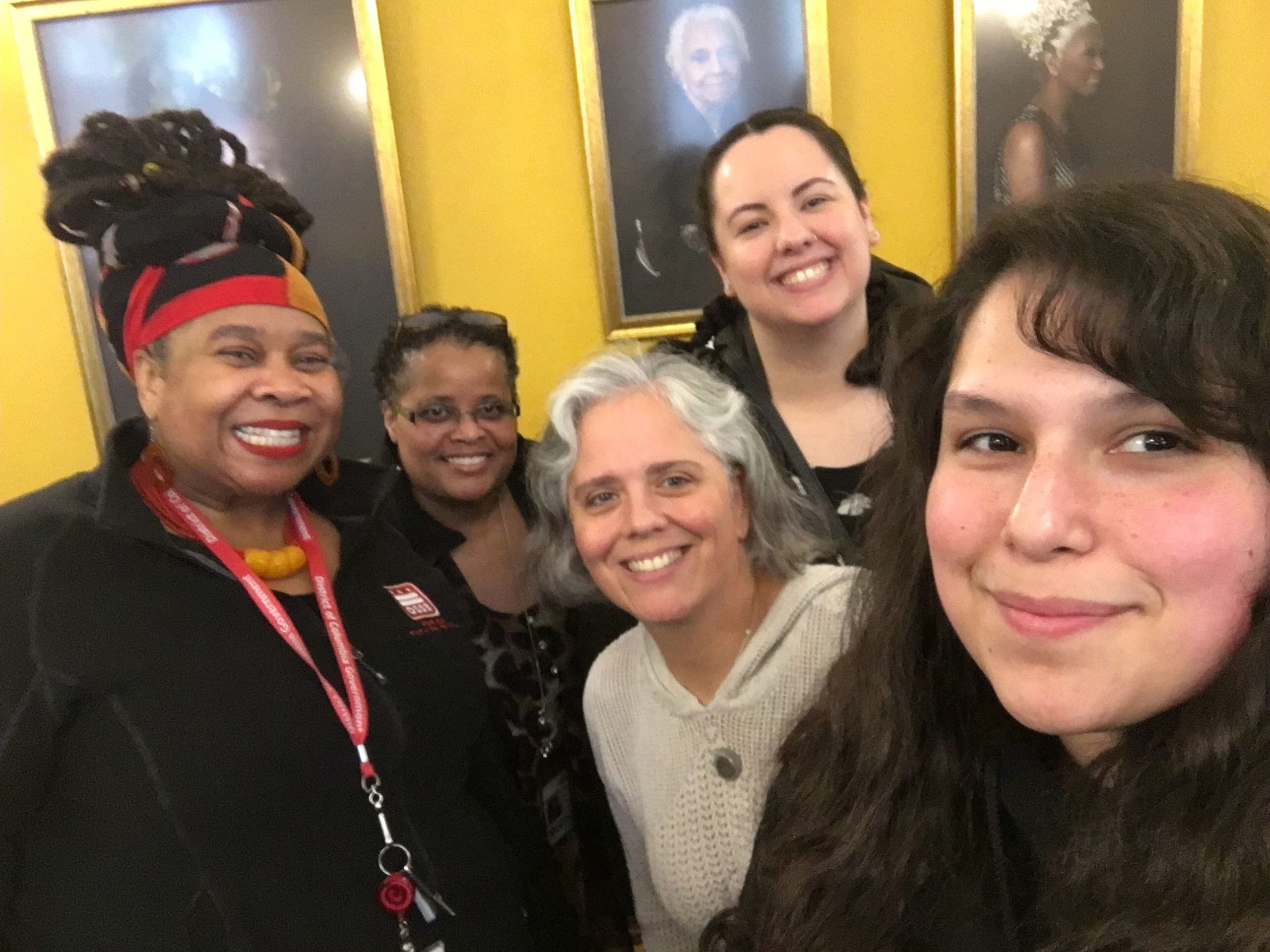
3. Removing barriers to the FAFSA for unaccompanied youth experiencing homelessness. One of the most significant barriers to higher education for youth experiencing homelessness is accessing financial aid; without financial aid, they cannot transition to and complete their college education. Without post-secondary education, they will remain at higher risk of continued homelessness as adults. This year, we published a national report analyzing six years of FAFSA data, created a dedicated FAFSA page with many new resources for youth and educators, and continued our partnership with the National Association of Financial Aid Administrators (NASFAA) with a webinar and a joint COVID-19 resource. We were contacted directly by many young people facing FAFSA hurdles, and provided hands-on assistance and advocacy to address the individual needs of these students.
Helping Students Navigate the FAFSA
4. Increasing collaboration between local educational agencies and Head Start programs to improve access for children experiencing homelessness. Quality early childhood education can change the trajectory of a child’s life, and is particularly essential for young children experiencing homelessness. In partnership with state Head Start Collaboration Directors, we created guidance for integrating homelessness into working agreements and MOUs between Head Start grantees and local educational agencies. We began a new project with the National Head Start Association: an “app” to expedite and streamline referrals between school district McKinney-Vento liaisons and Head Start programs. The app is currently in early pilot testing, and we are excited to see its launch in 2021.
5. Ramped up outreach to Hispanic/Latinx families and youth by creating a Spanish-language webpage. More than 30% of high school students experiencing homelessness identify as Hispanic/Latinx, and nearly 30% of families in HUD-funded shelters are Hispanic/Latinx. To improve effective outreach and help these families and youth exercise their educational rights, we created a new resource page entirely in Spanish, with fact sheets, flyers, and videos to support children and youth experiencing homelessness, birth through higher education.
2020 Youth Leadership Accomplishments
SchoolHouse Connection’s Youth Leadership and Scholarship (YLS) program provides scholarships and basic needs assistance, builds a stable peer and adult support network, and offers young people meaningful opportunities to engage in advocacy. Throughout 2020, we developed and implemented new initiatives to improve our YLS program, while also adapting to the challenges our students are facing as a result of the coronavirus pandemic.
1. The creation and release of Youth Connection, a resource hub on our web site where all resources are written “by students, for students.” This past Spring, we recognized that many of our students were struggling financially because of internship and job cancellations due to COVID-19. Initially, we provided $100 monthly stipends to all scholars to help offset these burdens. As the pandemic went on, we realized we could create a resume-building opportunity by providing additional financial support for scholars who were interested and available to write for us. We contracted with six of our scholars to create 14 resources written “by students, for students” that will be released throughout the year. Some of the topics covered include applying to college, completing the FAFSA, the benefits of becoming a Resident Advisor, mental health resources, national hotline information, and planning for college breaks.
2. Strategic case management to offset the impact of COVID-19 and virtual learning. COVID-19 has created numerous barriers to education for students in both K-12 and higher education. We have worked diligently this year to help our scholars navigate these barriers and mitigate the impact of COVID-19. This included strategic outreach and case management to create plans for housing and food access for students staying off campus, providing social-emotional support to students to help with feelings of isolation, connecting students to each other for peer-to-peer support, hosting virtual chat nights and movie streams to maintain a sense of community, assisting with FAFSA completion, enrollment, and class registration, and providing emergency assistance for crises and unforeseen circumstances. In addition to providing case management and emergency assistance, we were also able to provide $100 monthly stipends to students throughout COVID-19 to help offset financial needs.
3. Promoting youth-created advocacy and educational content with national reach. Our youth often are asked to speak at virtual trainings, conferences, and advocacy events. This year, our scholars created educational and/or advocacy content more than 100 times, averaging out to roughly 10 new scholar resources or speaking engagements per month. Since most resources are shared at the national level, our students’ voices are heard often and by people all across the country; their lived experiences and insights thus have an impact far beyond our scholarship program. Thanks to our generous donors and foundation partners, in 2020 we have been able to compensate students for their time and expertise for every speaking engagement and writing project.
Raising Awareness, Educating the Public
Child, youth, and family homelessness is largely an invisible crisis: stigma, shame, fear of authorities, lack of shelter, and high mobility mean that communities and policymakers don’t see children and youth experiencing homelessness in the same way that they see single homeless adults. As a result, homeless youth and families are not prioritized for assistance, and face many barriers to receiving the protections and resources to which they are entitled. In 2020, SHC looked for and found new and creative ways to shine a light on child, youth, and family homelessness, and ramped up our overall media and communications efforts.
1. We developed three public service announcements aimed at reaching families, youth, educators, community organizations, and leaders. The closing of school buildings and early learning programs in response to the pandemic made it even easier for children and youth experiencing homelessness to fall through the cracks, and become further disconnected from sources of support. To help spread the word and give communities a starting place for outreach and identification, we created two PSAs, and worked with Sesame Street Workshop to create a third PSA, and we assembled dedicated resources pages (LetsEducateEveryChild.Org and IDeserveanEducation.Org) to accompany them. We also compiled a national directory of school district homeless liaisons to help connect parents and youth to points of contact at every school district.

2. We were sought out for our expertise by numerous print, radio, television, and web media, and were quoted in more than 60 stories in 2020, more than twice the coverage of 2019. Our work was highlighted by a broad range of media outlets including in The New York Times, NPR, 60 Minutes, Vice, Reuters, CNN, 74 Million, Education Week, and Chalkbeat, among others. Highlights include:
- An Impossible Choice For Homeless Parents: A Job, Or Their Child’s Education \\\\ NPR – October 7, 2020
- The Children in the Shadows: New York City’s Homeless Students \\\\ The New York Times Magazine – September 9, 2020
- Students Who Are Homeless Need Us Now More Than Ever. And It Starts at the Top. \\\\ Education Post – May 12, 2020
- The Realities of Life for Homeless Students Must Be Part of Remote Learning Strategies During Coronavirus Shutdowns \\\\ The 74 Million – April 14, 2020
- The Coronavirus Class Divide: Space and Privacy \\\\ The New York Times – April 12, 2020
- More Than 1 in 4 Homeless Students Dropped Off Schools’ Radar During the Pandemic \\\\ Education Week –November 25, 2020
3. We found new ways to distribute our resources and communicate our message through social media and web videos, including:
- Launching Medium and Instagram. The Medium page serves as a resource for smart, innovative thinking on solutions to child, youth, and family homelessness. It is a hub of expertise and stories that break down the issue in human terms and make the conversation around solutions more accessible and engaging to broader audiences – including educators, service providers, or community members not as familiar with the issue. Instagram was launched to reach a younger and broader audience, particularly youth experiencing homelessness looking for resources.
- Creating college and COVID videos to share higher education institution best practices of supporting students experiencing homelessness. These videos, along with an editable toolkit, provides practical tips for colleges to reach a broader audience and to better provide support to students.
- Publishing “From the Field: Challenges and Strategies Supporting Children, Youth, and Families,” a video series where we sat down with school district homeless liaisons and other providers from across the nation to share their experiences and tips as they faced the COVID-19 pandemic at the start of the 2020 school year.
Most Popular Resources of 2020
In 2020, we provided many tools to help early care and education professionals implement law and policy. Here were some of the year’s most popular resources:
- Public Service Announcements: Raising Awareness and Reaching Families and Youth Experiencing Homelessness
- McKinney-Vento Act: Quick Reference
- Preparing for School Reopening and Recovery: Considerations in Serving Children and Youth Experiencing Homelessness
- Tips for Helping Homeless Youth Succeed in College
- Young Children Experiencing Homelessness: An Overview
Springing into Action!
Most Popular Webinars of 2020
We conducted more webinars in 2020 than ever before, featuring expert national, state, and local presenters. Here are the five most-viewed and attended 2020 webinars:
- Federal Policy Update: Coronavirus Funding and Policy on Child and Youth Homelessness
- FERPA and Students Experiencing Homelessness
- Virtual Conversation with SHC on COVID-19 #2
- Responsive Early Education for Young Children and Families Experiencing Homelessness
- Back to Basics: College Students Experiencing Homelessness
Most Popular Guest Blogs of 2020
We gain invaluable insights from school district liaisons, state coordinators, service providers and young people. Here are the most viewed essays:
- The Pitfalls of HUD’s Point-in-Time Count
- Stable Homes, Stable Schools: The Imperative of Doing Things Differently
- Supporting Our Students Amidst the Unknown: Evolving Lessons During COVID-19
- Parenting Through Homelessness and COVID-19: The Unfiltered Truth
- Homelessness and the Pandemic: Five Youth Share Insights
Most Popular Newsletters of 2020
We provide timely information on federal and state policy, new resources, research, and local and state guest perspectives on innovative practices and programs. Here are some examples of our newsletters:
- COVID-19 and Homelessness: Strategies for Schools and Early Learning Programs
- Education Waivers Related to Homelessness + Other COVID-19 Federal Waivers
- Major COVID-19 Relief Bill Passed + New Resources
- COVID-19 Compilation from SHC
- New Federal Funds Provide Opportunities for Homeless Students
Most Popular Research Posts of 2020
2020 brought new insights on homelessness from research, especially with the pandemic. Here are some of the most impactful and important studies:
- Public Schools Report Over 1.5 Million Homeless Children and Youth – All Time Record
- Opportunities for Impact: Child and Youth Homelessness, Schools, and COVID-19
- Charter Schools and Students Experiencing Homelessness: Practices and Recommendations for Success
- Lost in the Masked Shuffle & Virtual Void: Children and Youth Experiencing Homelessness Amidst the Pandemic#RealCollege During the Pandemic
- FAFSA & Homeless Youth: Challenges + Recommendations in the COVID-19 Era