Higher Education (February 2026)

Removing Barriers, Building Futures: Data-Informed Policies to Support College Students Experiencing Homelessness

New data analysis shows that college students who have experienced homelessness face deeper hardship and more barriers to staying enrolled than other students. This page highlights key findings and practical actions for local institutions of higher education, states, and Congress.

Read the full policy brief: Download the Report

Watch the Recording

We hosted a national webinar unpacking the findings and discussed what they mean for campus, state, and federal policy.
Dive Deeper

The Urgent Reality Facing College Students Experiencing Homelessness

Federal data from the 2019 National Postsecondary Student Aid Study estimate that more than 1.5 million college students experienced homelessness. More recent large-scale surveys indicate that approximately 14% of students report experiencing homelessness. Housing-related hardship is even more common and is linked to lower postsecondary persistence and completion.
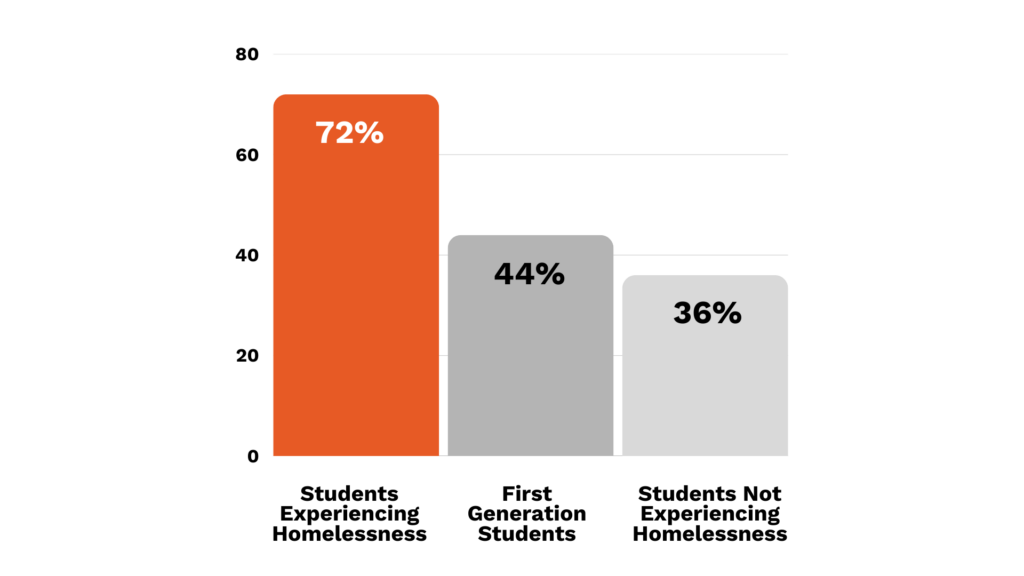
Bottom Line:

Broad “basic needs” or first-generation initiatives may not be sufficient on their own to reach students experiencing homelessness. Institutions and policymakers must intentionally identify and support students experiencing homelessness alongside broader supports.


Key Findings

Across nearly all measures examined, students who experienced homelessness reported greater hardship than students who had not experienced homelessness, including first-generation students who had not experienced homelessness.

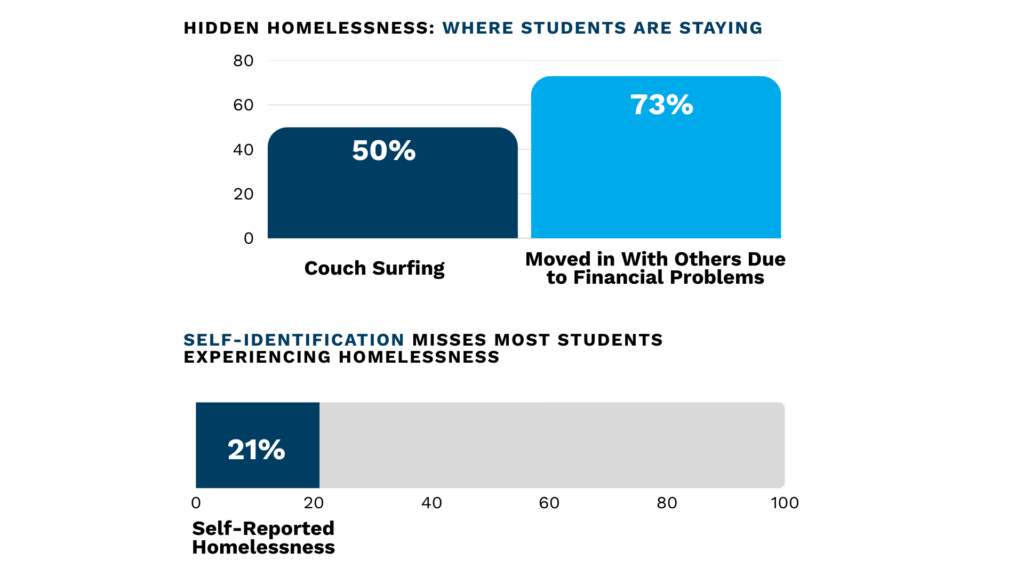
Student homelessness is often hidden – and therefore easy to miss.

Food insecurity is far more common among students experiencing homelessness.

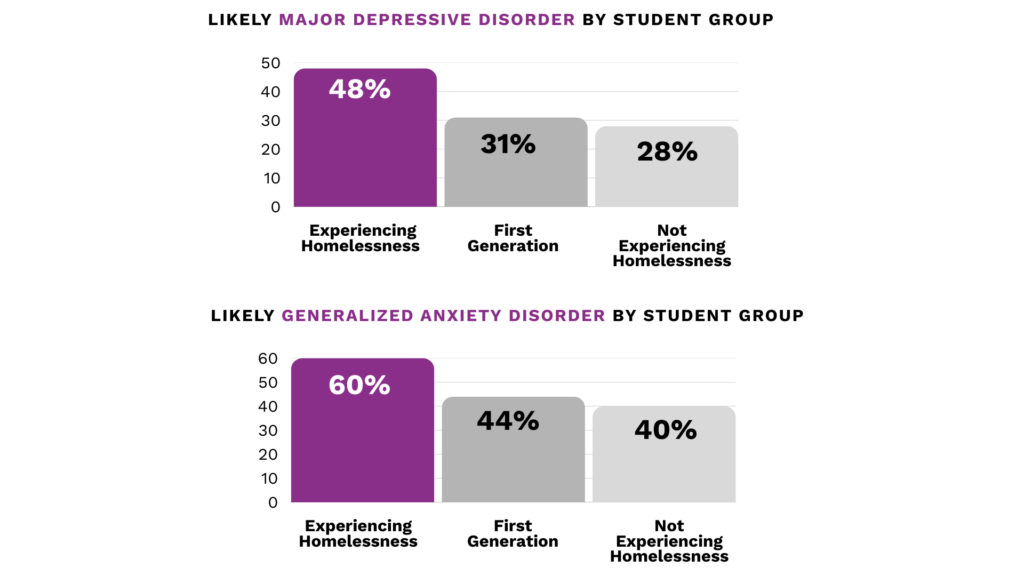
Mental health burdens are higher.

Students experiencing homelessness were more likely to screen positive for major depressive disorder and generalized anxiety disorder.

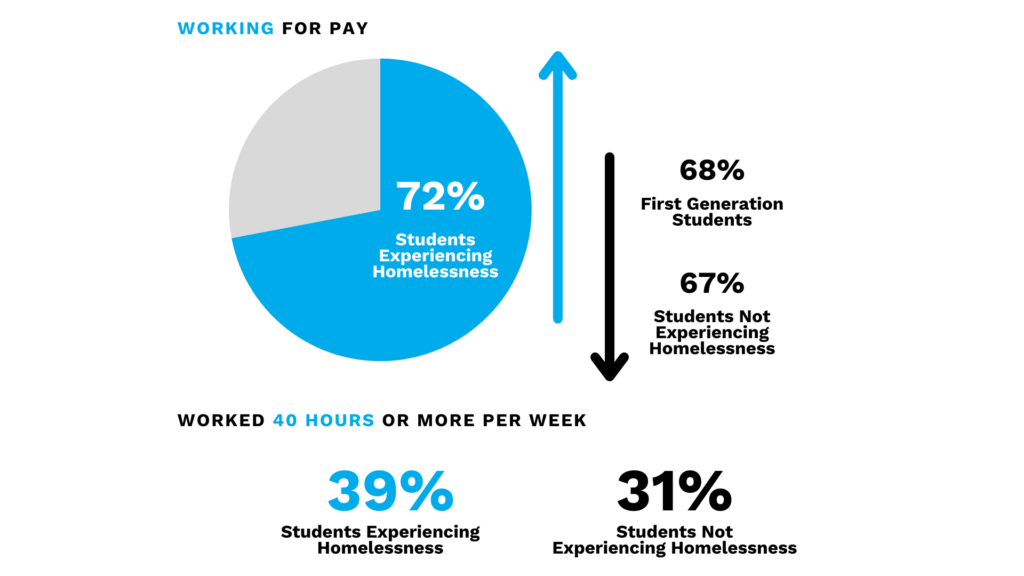
Work intensity is higher among students who experienced homelessness.

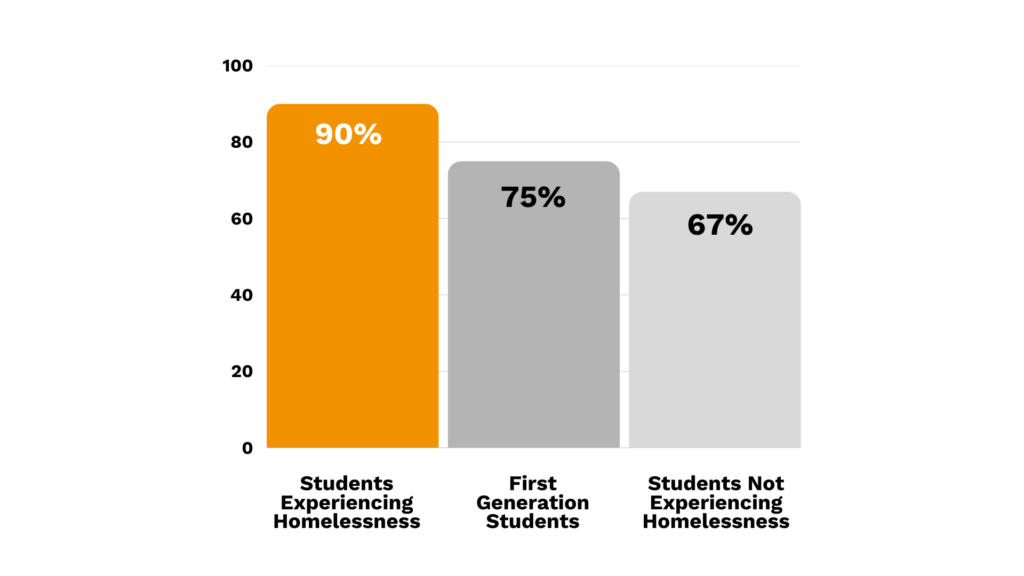
Despite working, financial hardship is nearly universal among students experiencing homelessness.

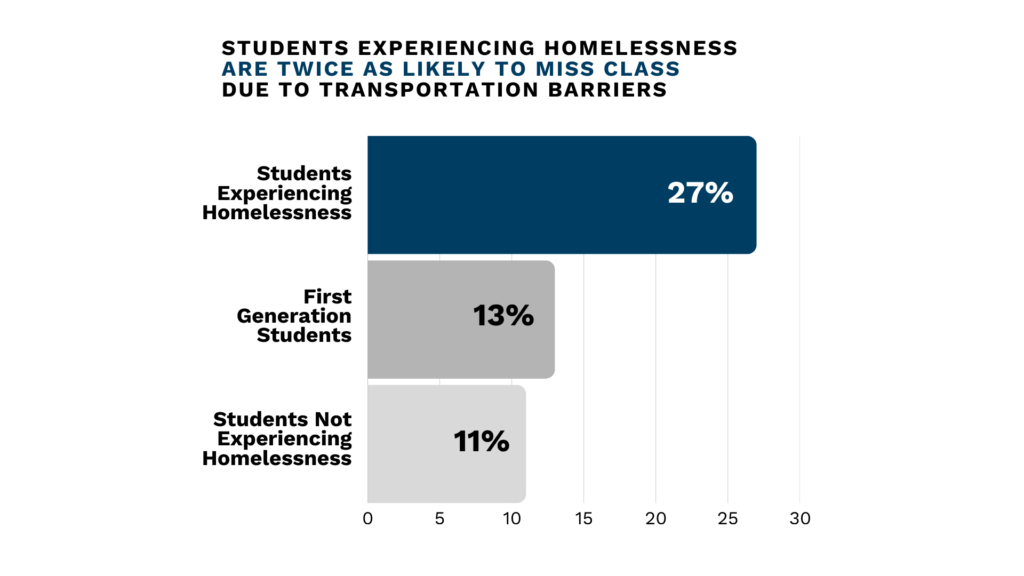
Transportation barriers translate into missed class time.

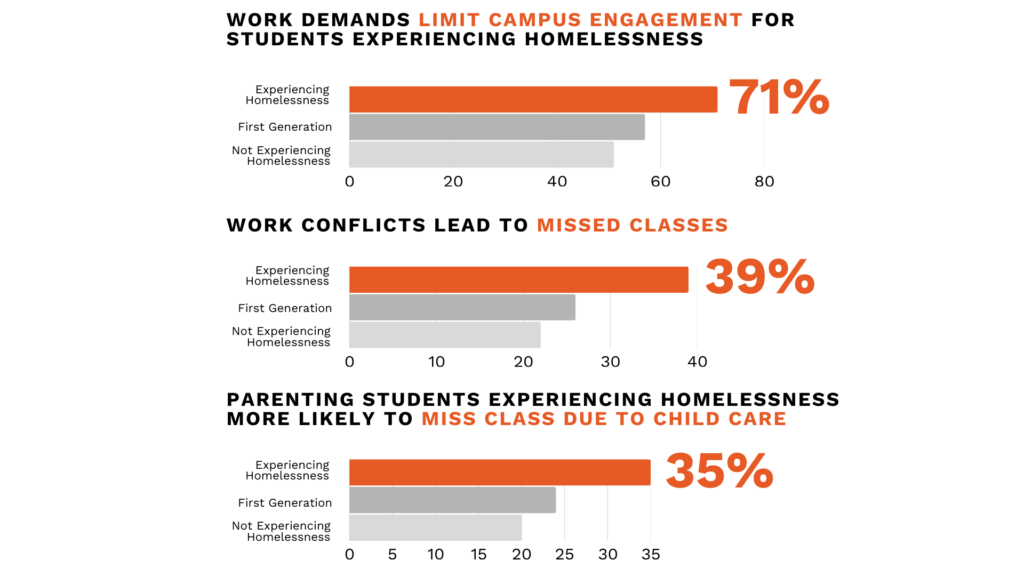
Work and child care demands more often disrupt education.

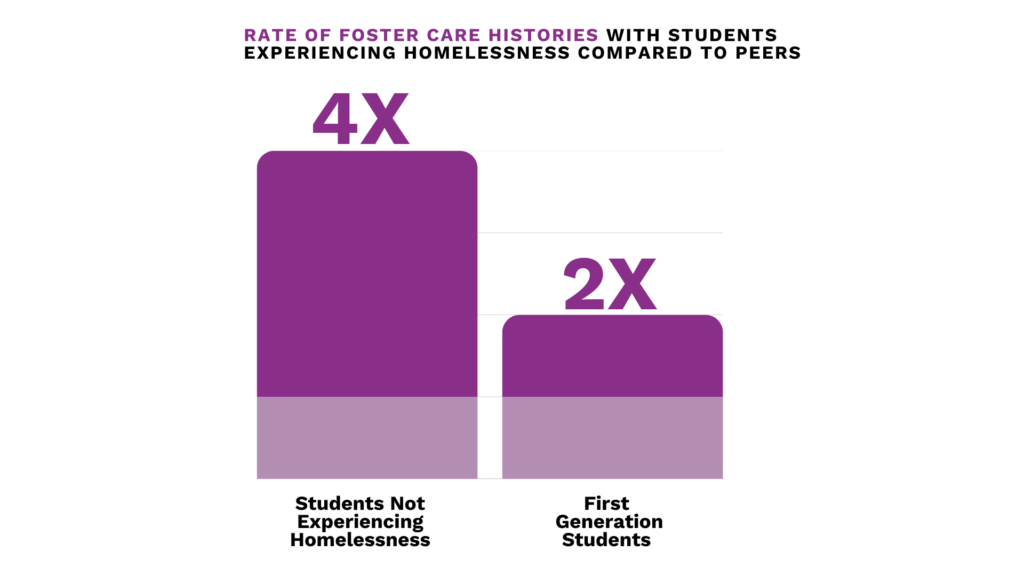
Students experiencing homelessness are more likely to have foster care histories.

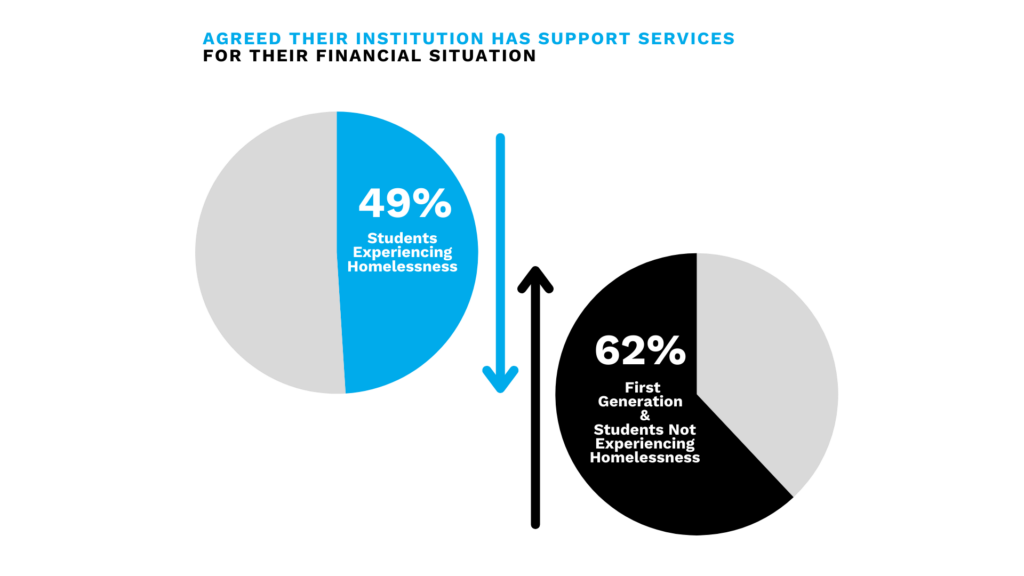
Students experiencing homelessness report less institutional support despite greater need.


Overview of Strategies

Higher education remains one of the most powerful engines of economic mobility. However, because homelessness is often hidden and compounds hardship, institutions and policymakers should not assume that general “basic needs” initiatives will reach these students.

The data support policies and practices that intentionally identify and support students experiencing homelessness. The recommendations below reflect four overarching solutions aligned with what the data show.

1. Designate and Train Homeless Higher Education Liaisons

  1. Designate a liaison and provide training.
  2. Make the role visible.
  3. Build identification pathways.
  4. Pair the liaison with a robust referral system and the authority to help students access resources directly.

2. Make emergency aid accessible and responsive to homeless students

  1. Make emergency aid broad and flexible by design.
  2. Remove eligibility restrictions that may exclude homeless students.
  3. Conduct proactive outreach to students experiencing homelessness.
  4. Streamline the application and accelerate decisions.
  5. Pair emergency aid with a person and wraparound support.
  6. Update policies to ensure clarity and awareness that emergency grants are not counted against Cost of Attendance.

3. Support gap and year-round housing options

  1. Utilize residence halls during breaks and for emergency housing.
  2. Formalize community partnerships.
  3. Use the homeless liaison as a housing connector.
  4. Defer housing fees for vulnerable students until after financial aid is disbursed.
  5. Prioritize students experiencing homelessness for housing access.
  6. Develop a coordinated referral system and identification practices.

4. Improve support for students transitioning from high school

  1. Help high school students make informed decisions.
  2. Assist students to complete the FAFSA as early as possible.
  3. Host specialized tours and orientations.
  4. Create a warm handoff with K–12 McKinney-Vento liaisons and foster care points of contact.
  5. Connect students to summer bridge programs.

Take Action Today!

Use This Toolkit to Amplify This Report

Use these sample posts and email template to help amplify this report.

Share This Report

Share this report with campus leadership, including student affairs, basic needs, housing, financial aid, and student success teams, as well as state and federal policymakers.

Use the Strategies Checklist

Use the strategies as a checklist for campus policy, state legislation, or federal advocacy