
Child Care for Children Experiencing Homelessness: What States Need to Know and Do
Learn how states are meeting federal child care requirements for families experiencing homelessness. Explore key barriers, legal obligations, and state-by-state provisions on grace periods, co-payment waivers, and documentation requirements.
High-quality early childhood programs, including licensed child care, are vital for children and families experiencing homelessness. These programs support healthy development and help mitigate the impact of homelessness. They also provide a safe space for children, allowing parents to seek work and housing. However, many homeless families face barriers to accessing child care.
What child care barriers do families experiencing homelessness face?
- Lack of documentation required for enrollment, such as birth certificates, immunization records, proof of work
- Transportation
- Misconceptions about who meets the definition of homeless, especially among families staying temporarily with others in “doubled-up” situations
- Feelings of embarrassment or fear about disclosing their living situation
- Lack of understanding among providers and subsidy administrators of what homelessness is, how to appropriately ask about a family’s situation, and the legal requirements for prioritizing children experiencing homelessness
How does federal child care law prioritize children experiencing homelessness?
The Child Care and Development Block Grant Act of 2014 included several requirements to prioritize children and families homelessness. The U.S. Department of Health and Human Services issued regulations to implement this legislation through the Child Care and Development Fund program (CCDF) in September 2016, and again in February 2024. The regulations specify that lead state agencies must:
- Use the definition of homelessness in the education subtitle of the McKinney-Vento Act, which defines homelessness as lacking a fixed, regular, and adequate nighttime residence, and includes children who are staying temporarily with others due to lack of alternative (“doubled-up”), staying in hotels/motels, staying in a shelter, or who are unsheltered.1
- Establish grace periods for families experiencing homelessness to meet immunization and other health and safety requirements
- Provide priority for services to children experiencing homelessness
- Immediately enroll children experiencing homelessness while required documentation is being obtained
- Prioritize children experiencing homelessness for enrollment and on waitlists
- Provide training and technical assistance to providers on identifying and serving children experiencing homelessness
Federal Child Care Regulations & Homelessness
For a full list of CCDF requirements regarding prioritizing and serving children experiencing homelessness, see SHC’s summary of Federal Child Care Regulations and Homelessness.
Are states meeting child care requirements for families experiencing homelessness?
Many states have taken steps to meet these requirements and improve access to child care for children and families experiencing homelessness. [2] For example:
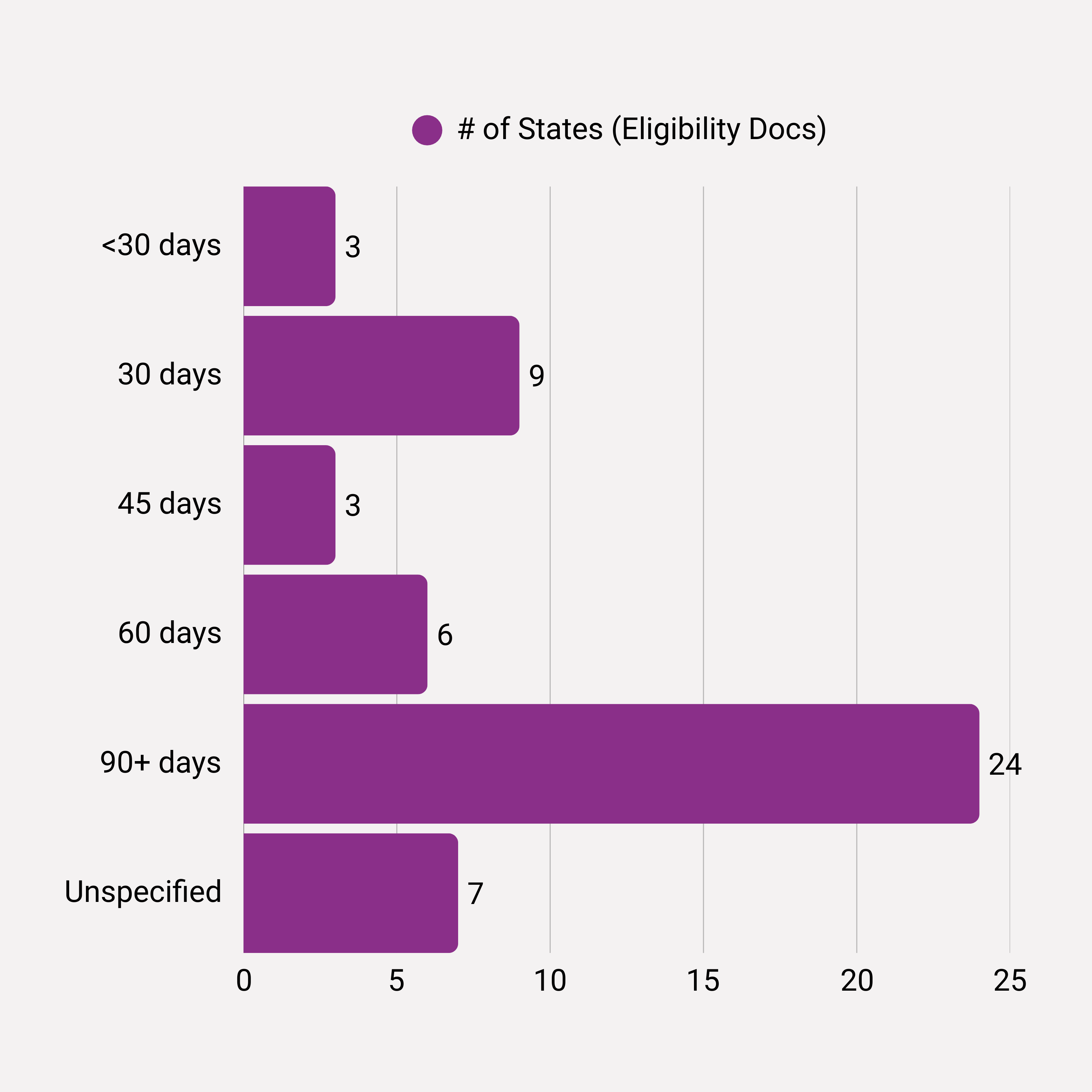
- All 50 states, plus the District of Columbia and Puerto Rico, are required to provide grace periods for submitting required eligibility documentation, such as birth certificates. The number of days provided by states ranges from less than 30 to more than 90.
- Less than 30 days: 3 states
- 30 days: 9 states;
- 45 days: 3 states
- 60 days: 6 states;
- 90 or more days: 24 states
- Not specified: 7 states
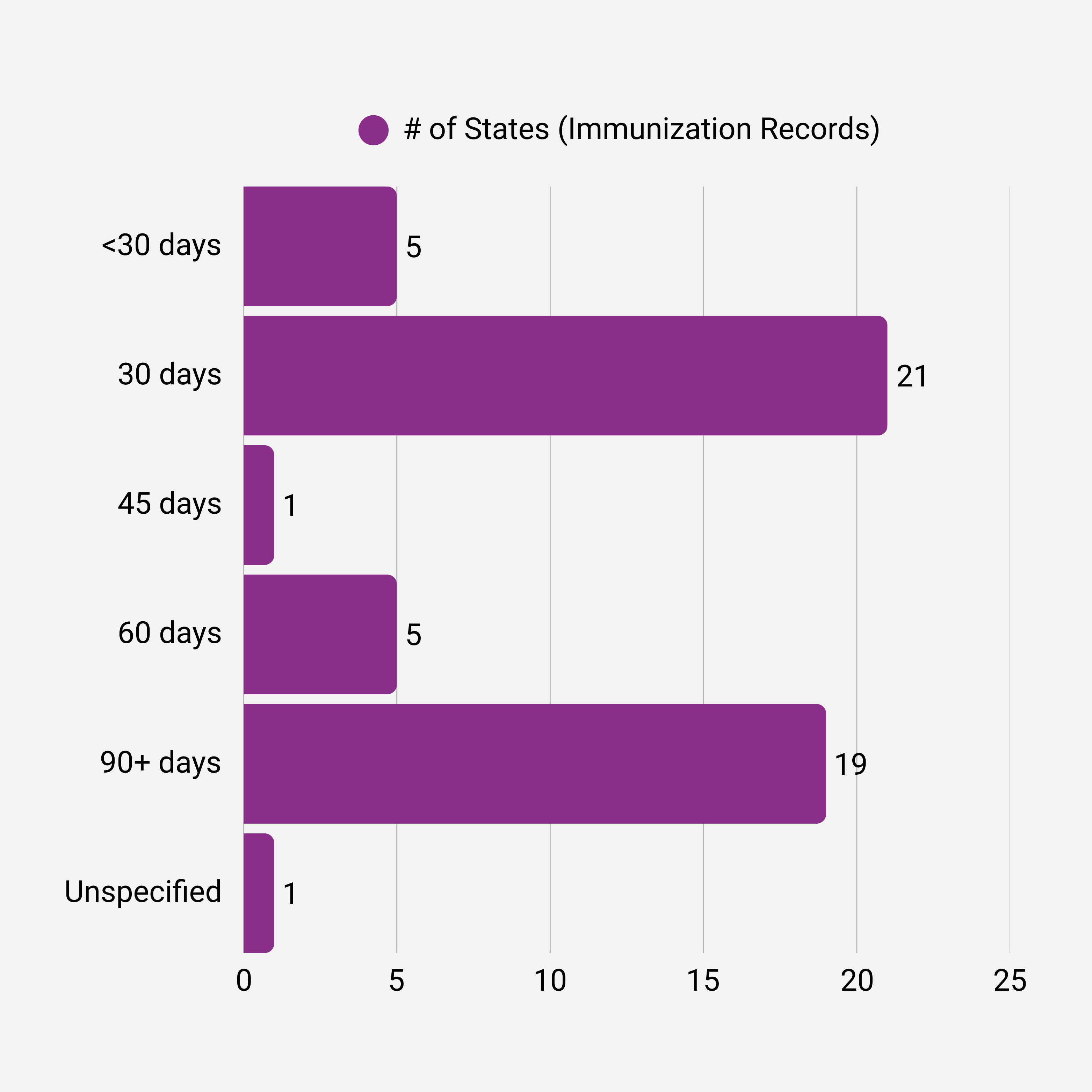
- All states are also required to provide grace periods for submitting immunization records, and the length of time also ranges from less than 30 to more than 90 days.
- Less than 30 days: 5 states
- 30 days: 21 states
- 45 days; 1 state
- 60 days: 5 states;
- 90 or more days: 19 states
- Not specified: 1 state
- 24 states waive the co-payment for families experiencing homelessness (a decrease of two states from the previous three-year CCDF grant period)
- 22 states do not require parents to submit proof-of-income (an increase from 9 states during the previous three-year CCDF grant period).
- To see what your state offers, please see the Appendix.
Still, some state provisions are lagging. Recently the Administration for Children and Families published areas in which state Child Care Development Fund (CCDF) plans are out of compliance with federal regulations. Specifically, the review found several state plans that do not meet the requirements for prioritizing and enrolling children experiencing homelessness, including:
- 4 states (Arizona, Delaware, Nebraska, and North Dakota) do not “…coordinate with licensing agencies and other relevant State and local agencies to provide referrals and support families experiencing homelessness…during a grace period to comply with immunization and other health and safety requirements”
- 1 state (California) does not have a grace period for children experiencing homelessness to “receive CCDF assistance in license-exempt centers, license-exempt family child care providers or license-exempt in-home providers” while families work to comply with immunization and other health and safety requirements
How can states meet these requirements and ultimately ensure children experiencing homelessness have full access to high-quality child care programs?
- Lead agencies should conduct a review of state plans to ensure the minimum requirements related to homeless children and families are being met:
- How many days does your state plan allow for families experiencing homelessness to submit birth certificates and immunization records? The process for retrieving these documents can be burdensome and time consuming – providing at least 30 days will give families the best chance to gather and submit them.
- What does your state plan specify regarding work requirements for parents experiencing homelessness?
- Conduct training to ensure that all providers and other agencies working with families experiencing homelessness are aware of requirements, and also equipped with tools, resources, and best practices for meeting their needs. For example, the Louisiana Department of Education, in partnership with SchoolHouse Connection, conducted a three-part virtual webinar series for all child care providers.
- Provide dedicated services to assist families experiencing homelessness navigate the process for accessing programs, including the child care subsidy application. For example, South Carolina’s Child Care Resource & Referral Agency has a full-time Homeless Support & Child Care Referral Specialist who helps homeless families find child care and navigate the application and paperwork process.
Footnotes:
[1] Section 725 of Subtitle VII-B of the McKinney-Vento Act (42 U.S.C. 11434a)
[2] Administration for Children & Families, FY 2025-2027 State/Territory CCDF Plans, https://acf.gov/occ/form/approved-ccdf-plans-fy-2025-2027 (February, 2025).