Lance Bordelon
Senior Manager, Digital Marketing & Communications

Looking back, SHC’s motto for 2023 might be best summed up as “we’ll find a way.”
Despite growing need and numerous other challenges, we advanced policy and practice to help children and youth overcome homelessness through education, from prenatal through postsecondary.
In this year-in-review, you’ll find a summary of the major issues we tackled in 2023, the progress we made, and our list of the most widely accessed and popular SHC resources in 2023, based on user analytics.
We hope you’ll be reminded of what we all accomplished — together — despite often overwhelming circumstances. We also hope you’ll discover useful tools and resources that you may have missed, and that you’ll find hope and inspiration in the words of our Youth Leadership & Scholarship scholars.
We invite you to join us in building on this year’s accomplishments through a donation to SchoolHouse Connection. From December 1-December 31st, 100% of donations will support our YLS scholars, and will be matched by an anonymous donor, up to $5,000.
We thank you for your partnership. We wish you joyous holidays, and we look forward to continuing our collective work in 2024.
-The SchoolHouse Connection Team


SHC welcomed SIX new team members in 2023, growing our team to help meet the needs of children, youth, and families. Learn more about them here!


In October 2023, the Proceedings of the National Academy of Sciences published a study revealing that the Americans who are the most at risk of eviction are babies and toddlers, and that children under the age of 5 make up the largest group by age of people whose households have had an eviction action filed against them.
These findings are consistent with data showing that the person who is the most likely to stay in a homeless shelter in the U.S. is an infant under the age of one.
Despite the disproportionate risks of homelessness faced by infants, toddlers, and pre-school age children, and the harmful impact of homelessness on their health, development, and future learning, these young children are invisible to the public, policymakers, and, all too often, even to the early childhood programs that could mitigate the impact of homelessness on child development and connect families to housing and services.
SHC launched a communications and research project to raise awareness and build understanding of early childhood homelessness in both the homelessness and early childhood development sectors, so that each sector prioritizes and serves infants and toddlers who are homeless, and works together for holistic, two-generation support to ensure that children and families thrive.
SHC worked with six states to develop action plans for increasing the enrollment of infants and toddlers experiencing homelessness. As a result, one state added training on homeless identification to their statewide Home Visiting conference.
SHC continued to pilot a referral app to increase the enrollment in Head Start of children experiencing homelessness in eight states.
Despite research showing the injurious impact of homelessness on our youngest children, there were no estimates of how many infants and toddlers experienced homelessness, or how many participated in high-quality early learning programs–until now. SHC’s ground-breaking report establishes a set of benchmarks against which to assess progress, and provides a policy and practice roadmap at the local, state, and federal levels for increasing access to life-changing high-quality early learning programs.
We welcomed Sarah Vrabic as SHC’s Early Childhood Senior Program Manager, who is dedicated exclusively to increasing support for young children experiencing homelessness. She brings with her a decade of experience in cross-systems collaborations, including roles as a Community Consultant and Early Childhood Education Specialist at The BELL Project. Her leadership in the Everyday Learning Play Spaces initiative at HopePHL reflects her commitment to integrating trauma-informed design and playful learning environments into shelter settings.
SHC advocated at the state and federal level for stronger policies and more resources to support young children and their families experiencing homelessness. Specifically, SHC:

More than 1.2 million children and youth experiencing homelessness were identified by public schools in 2021-22, a 10% increase over the previous year. These students continue to suffer in the aftermath of the pandemic. The chronic absenteeism rate of students experiencing homelessness is now over 50%, more than double the rate of all students. Students experiencing homelessness graduate from high school at a rate that is thirteen percentage points below students from families with low incomes who are stably housed. This puts them at great risk for experiencing homelessness as an adult.
Student homelessness is also a matter of life and death. In 2023, for the first time, the Centers for Disease Control–in response to advocacy coordinated by SchoolHouse Connection–made homelessness questions part of the 2021 standard high school Youth Risk Behavior Survey questionnaire for all states. The data revealed that high school students who experienced homelessness were nearly twice as likely to have seriously considered suicide or made a suicide plan during the past year, and more than three times as likely to have attempted suicide during the past year.


Leading National Efforts To Help State And Local Educational Agencies Effectively Use Pandemic Recovery Funding (Known As American Rescue Plan Homeless Children And Youth” Or “ARP-HCY” Funds)
SHC led national efforts to help state and local educational agencies effectively use pandemic recovery funding (known as American Rescue Plan Homeless Children and Youth” or “ARP-HCY” funds) to identify and support children and youth experiencing homelessness. SHC advocated vigorously for these funds – which are eight times greater than the annual federal appropriation for homeless students – because most children, youth, and families experiencing homelessness were left out of previous pandemic relief funding packages. In 2023, we rolled up our sleeves to help schools make the most of ARP-HCY to meet urgent needs and to set the stage for lasting changes in how schools and communities respond to child and youth homelessness.

We welcomed a new K12 Senior Program Manager, Anasofia Trelles, to provide practical assistance on the McKinney-Vento Act and related educational policies and leverage practical assistance opportunities to inform state and national policy advocacy.
SHC directly answered over 500 questions from educators and service providers on a wide range of topics, from how to respond to specific situations encountered by individual children and youth to how to implement stronger programs and practices. We publish our answers in a searchable format on our website to help others who may have the same questions.
For example, SHC:
Co-led advocacy for the introduction of the Homeless Children and Youth Act, which is bipartisan legislation to remove barriers to homelessness assistance for children, youth, and families by amending the definition of homelessness used by the U.S. Department of Housing and Urban Development (HUD) to align with federal programs serving children and youth.
Native American students are 4.7 times more likely to experience homelessness than white youth. to address this disparity, schoolhouse connection is partnering with bie schools, state education agencies, and school districts to increase identification, training, and awareness.
In November, SHC released a newsletter spotlighting Native students experiencing homelessness. The newsletter delves into the challenges they face, offers recommendations, and amplifies the voice of the Director of the Parent Community Outreach Program at Browning Public Schools in Montana.

We welcomed TJ Lucas, Senior Program Manager for Federal Policy, who brings more than seven years of federal policy development and advocacy, including six years as staffer in the U.S. Senate.

We welcomed Bree Levy, who is now serving in an Intergovernment Personnel Act (IPA) temporary position on Special Populations for the U.S. Department of Education (DOE), Office of Elementary and Secondary Education, supporting the Department’s efforts to elevate and address the educational needs of students experiencing homelessness, students in foster care, and those involved with the juvenile justice system.

Approximately 4.2 million youth and young adults experience homelessness on their own every year. These unaccompanied homeless youth face unique barriers to accessing and completing higher education. Lack of family and support, coupled with histories of neglect, abuse, trauma, mobility, and deep poverty, create roadblocks to their path to and through postsecondary education. Yet some form of education beyond high school is increasingly necessary to obtain employment that pays enough to maintain housing stability.
Federal data released in 2023 show the devastating impact of the pandemic on the higher education prospects of youth experiencing homelessness. Between 2019-2020 and 2021-2022, the number of unaccompanied homeless youth Free Application for Federal Student Aid (FAFSA) determinations decreased by 23%. Over this same period, the requests for homeless determinations for the 2021-2022 application cycle increased by 28%. As a result of these continuing FAFSA hurdles, youth experiencing homelessness may delay or even forgo higher education, which increases their risk of continued homelessness and poverty.
Explore Our Higher Education Page
These reforms expand the number of entities that can make determinations of a youth’s homelessness; remove burdensome requirements to prove homelessness every year; and require financial aid administrators to accept third-party determinations. Specifically, SHC:
Many institutions of higher education are designating liaisons for students experiencing homelessness. Similar to their counterparts in K-12 education, homeless higher education liaisons support students by connecting them to available resources on and off-campus, and removing barriers to their college retention and success. In 2023, SHC brought together more than 90 homeless higher education liaisons from 8 states to provide an opportunity for homeless higher education liaisons to share best practices for supporting students experiencing homelessness and engage in professional development activities. We also organized four collaborative events designed to facilitate the exchange of best practices within the network.
In May 2023, during his SUNY State of the University address, Chancellor John King Jr. announced that each SUNY campus president will appoint a homeless liaison. SHC was proud to be selected to support these liaisons through a Campus Homeless Liaison Learning Network. We also assisted the Illinois State Board of Education to implement a new state law requiring the designation of homeless liaisons on every campus.
Specifically, SHC:


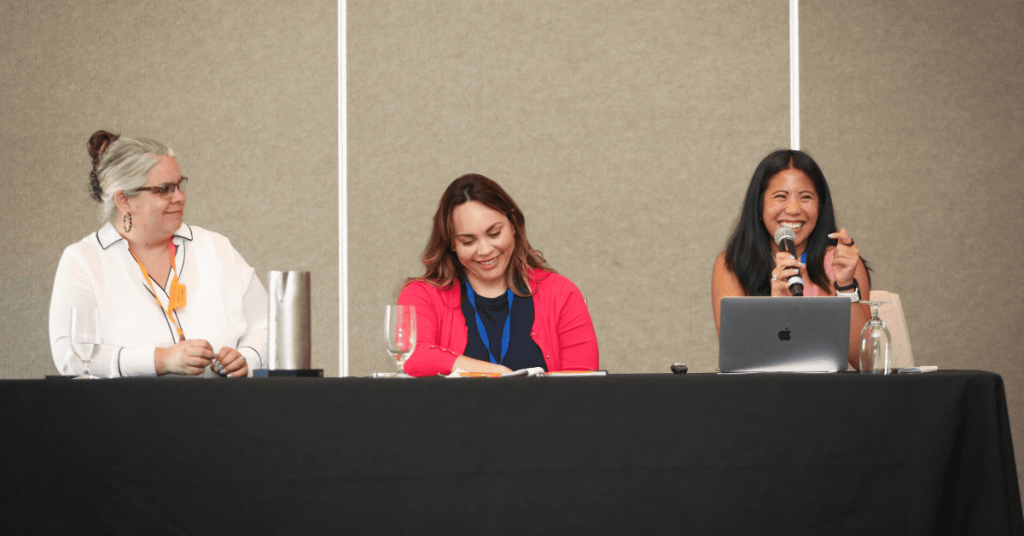
Jillian Sitjar, SHC’s director of higher education partnerships, presented at two sessions at the 2023 NAEHCY conference in New Orleans.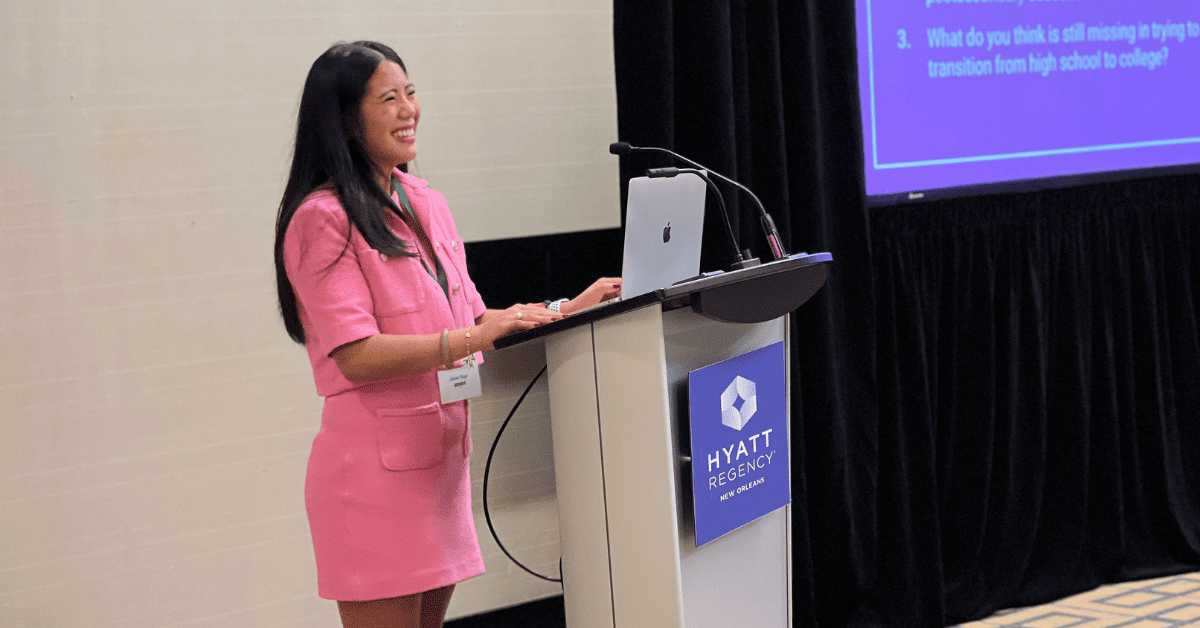
Jordyn Roark, director of youth leadership and scholarships, and Jillian Sitjar, director of higher education partnerships, presenting at the National Network for Youth conference in Washington, DC.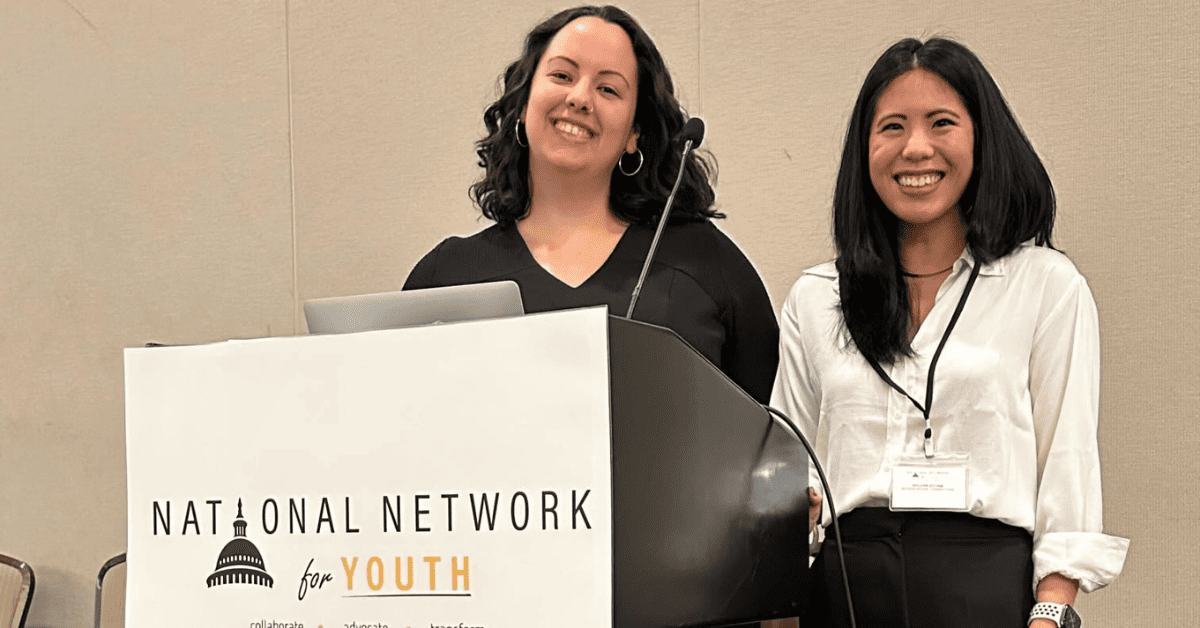
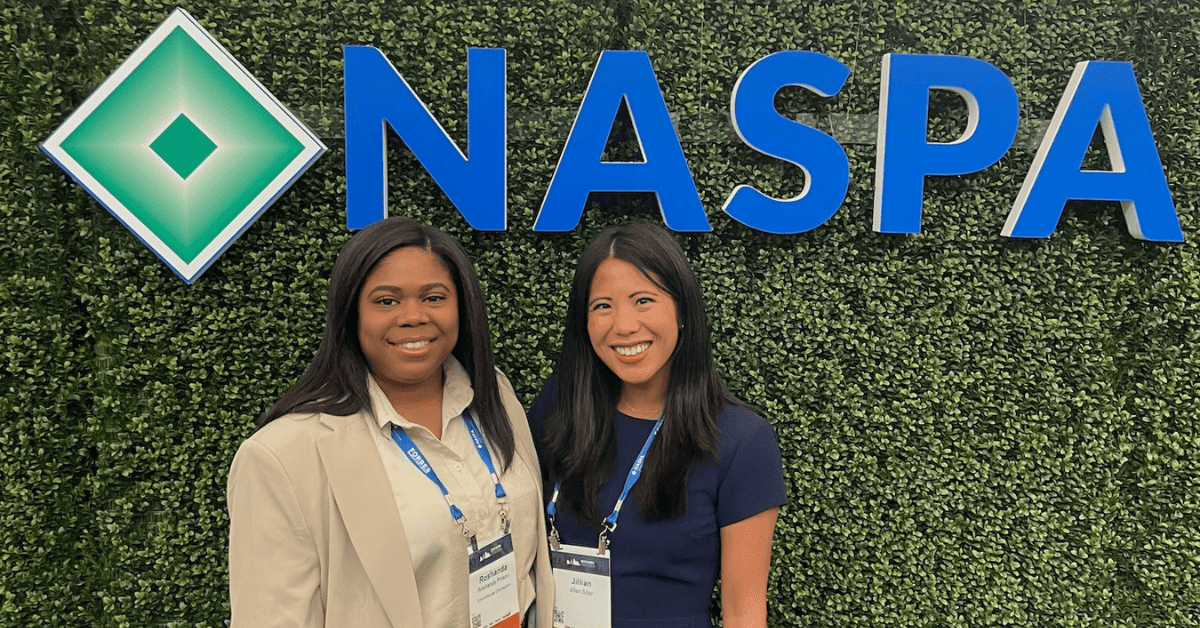
Roshanda Pinson, SHC’s youth leadership and scholarships program manager, and Jillian Sitjar, director of higher education partnerships, presenting at the NASPA conference in Boston, MA.
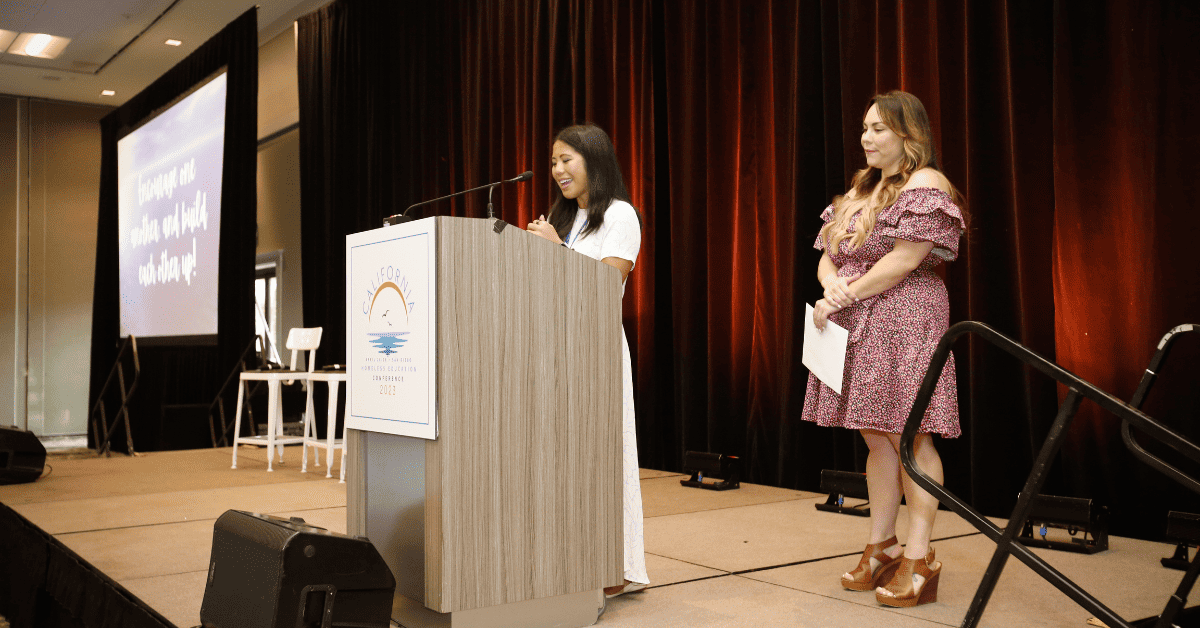
SchoolHouse Connection’s director of higher education partnerships, Jillian Sitjar, alongside Sarah Pauter (senior project manager at John Burton Advocates for Youth), announcing the winners of the 2022-2023 FAFSA/CADAA challenge for students experiencing homelessness at CA HETAC in San Diego.

Our 2023 federal policy accomplishments are highlighted in each of the sections above, from prenatal through postsecondary, to illustrate the connection between our practice work and our policy work. We believe that federal policy reform must be rooted in the experiences of local communities, and informed and shaped by practitioners, youth, and parents.
2023 Federal Policy ReviewState policy change is an essential strategy to remove barriers to education, housing, employment, medical care, and education faced by unaccompanied homeless youth, and to solve youth homelessness. Many of the laws that most directly impact youth who experience homelessness on their own – the rights of minors, health care, housing, employment, education, and child welfare – fall within the purview of state legislatures, and can only be addressed through changes to state law.
In addition to the state policies related to early care and education described above, SHC also worked with state partners to advance policies to allow youth who are homeless on their own to consent to their own routine medical care and treatment; to facilitate their access to housing, shelter, and related services; and to improve access to vital documents such as birth certificates and driver’s licenses. Some of our 2023 state policy highlights related to services and housing include:
SHC provided writen and oral testimony, as well as talking points, in support of a bill that established a $2 million student homelessness prevention pilot allowing McKinney-Vento school district liaisons to pay for emergency housing-related needs.
SHC helped draft S4287/4248 and A4029 in the legislature requiring designation of homeless liaisons on university campuses and providing additional support or homeless college students.
SHC provided advocacy training and organizing support for a coalition of advocates working on youth homelessness legislation concerning driver’s licenses, higher education support, and minor consent.
SHC helped draft HB4087 that would provide minor youth experiencing homelessness (age 14 and over) the ability to consent to medical care and treatment for themselves and their children This would dramatically improve the health of 26,867 youth experiencing homelessness who cannot access care when needed. SHC also drafted amendments to the FAFSA completion bill SB463 to help more homeless and former foster care youth get the appropriate support they need to maximize financial aid and improve college affordability.
In collaboration with the Wisconsin Association for Homeless and Runaway Services (WAHRS), SHC is working on a package of bills that would provide needed support and protections for the 13,450 youth experiencing homelessness in the state. This includes bills to protect youth from human trafficking, to extend additional time to service providers to assists runaway youth, and to provide minors the ability to consent to their own medical care and treatment, including parenting teens.
SHC provided direct assistance to the sponsor of HB 1462, legislation that increases access to vital documents, including by waiving fees for driver’s permits, driver’s licenses, state identification cards, and college transcripts. The bill will impact 11,871 youth experiencing homelessness and 4,300 youth in foster care.
SHC helped pass SB113 ensuring the rights of the 5,632 students experiencing homelessness to enroll in districts where they are considered nonresidents.
SHC provided written testimony and advocated alongside the Ecumenical Ministries of Oregon, the Oregon Housing Alliance, and Oregon Housing to continue a host home project that we helped to establish in 2021. The 2023 bill provides another $2.4 million for a Host Home Demonstration Project that supports long-term and short-term host home initiatives for at least 8,358 unaccompanied youth.
SHC’s Advocacy Network launched in July 2023. The Advocacy Network serves as a support mechanism for children and youth experiencing homelessness, educators, and service providers across the country. Through the Advocacy Network, we are educating, supporting, and creating opportunities for local advocates across the country to advance federal and state policies on child and youth homelessness. Members of the Advocacy Network receive state and federal resources, development opportunities, and actionable activities and are connected to a cohort of like-minded individuals to problem solve and to address the needs of children and youth experiencing homelessness.

SHC’s Youth Leadership & Scholarship (YLS) program provides scholarship recipients with a scholarship award, college completion resources to meet emergency needs, one-on-one help navigating college and life, and a stable peer and adult support network.
2023 YLS highlights include:

Our scholars share the importance of the scholarship program in their lives, their gratitude for all who have invested in the program, and the life-shaping impact of being seen and supported while experiencing homelessness.
SHC scholars accepting their scholarship awards in Orlando, Florida.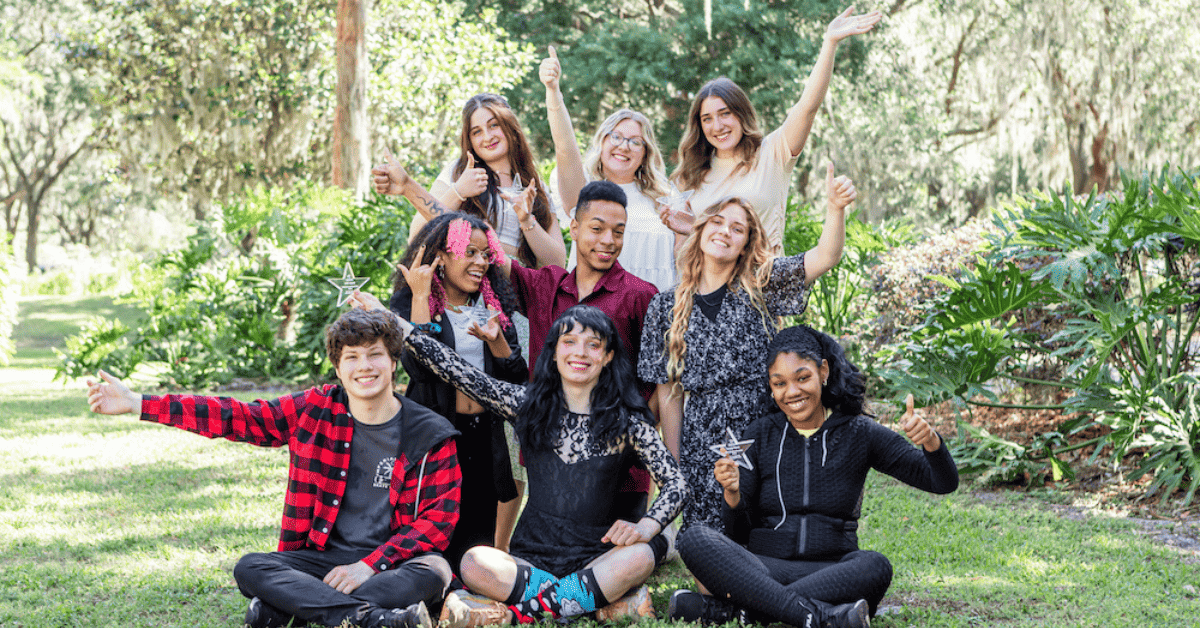
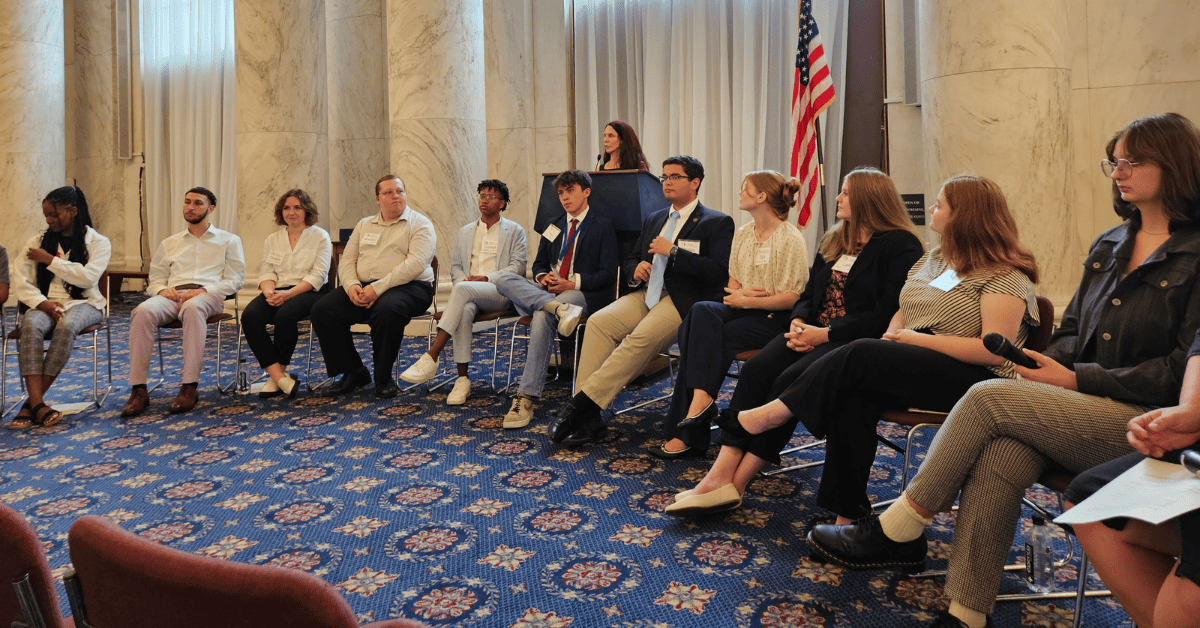
SHC scholars sharing their experiences and expertise during a congressional briefing.
SHC scholars participating at a 5 day trip of advocacy opportunities and fun activities around the nation’s capital.

SHC scholars enjoying each other’s company at the first-ever camp connection trip focusing on career and life skills.


Child and youth homelessness is largely hidden from sight – from the public, and from the practitioners and policymakers who are best positioned to help. The early care and education challenges created by homelessness are also unrecognized, contributing to a failure to prioritize the educational needs of children and youth experiencing homelessness.
In 2023, SHC responded to these challenges by:

We welcomed Lance Bordelon as SHC’s Digital Marketing & Communications Associate, who brings with him a professional background in marketing, communications, and graphic design.